Coiled & ridged
An arranged coil with visible ridges is one murukku example. Form and surface are separate details.
Explore this style ↗Learn to describe visible shapes and surfaces. Use those observations as a starting point, then confirm the name and ingredients with the maker.
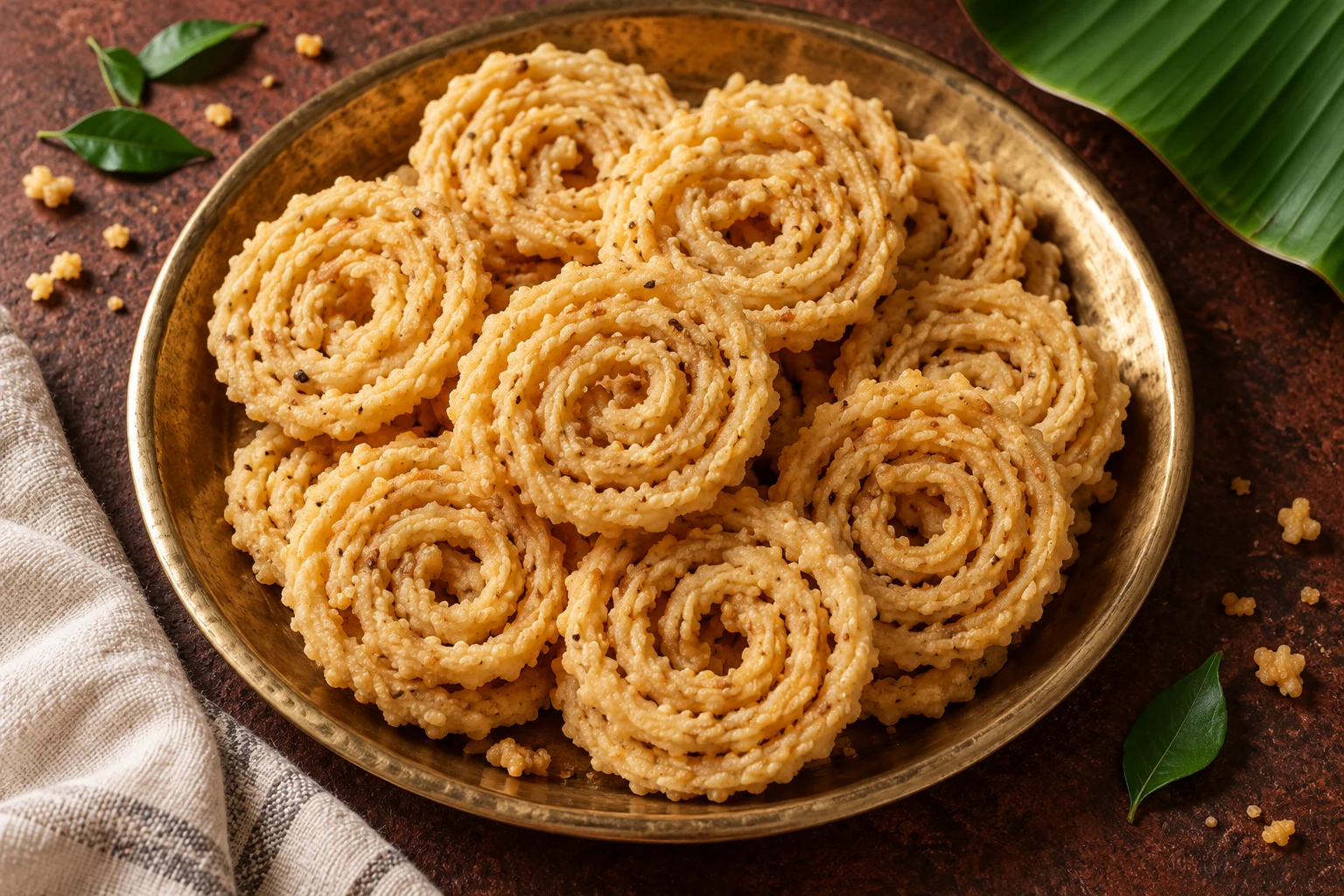 AI-generated illustrative image · shape reference only
Notice how a strand turns and how closely the loops are arranged.
Ridges are visible surface features; they do not tell you the flour blend.
Observe relative thickness. This image has no scale for measuring size.
An arranged coil with visible ridges is one murukku example. Form and surface are separate details.
Explore this style ↗A useful starting clue for thenkuzhal-style comparison. Read the maker’s style description too.
Explore this style ↗Sev often invites a comparison of fine or thicker strands. Look at thickness alongside the flour and seasoning.
Explore this style ↗Ribbon pakoda offers flattened bands rather than round strands. A shape clue does not establish a complete recipe.
Explore this style ↗Diagrams are schematic comparisons, not product photographs or a universal classification.
These photographs show general snack styles. They do not certify Manapparai origin or the ingredients of any item in our directory.


Is the sample coiled, loose, sliced, or arranged as a ribbon?
Describe ridges, smoother strands, or flat bands.
Compare samples side by side rather than estimating from unrelated photos.
Use the maker’s information to establish ingredients and the actual style.